Before You Buy Another Pair: The Three-Shoe Test That Pays for Itself
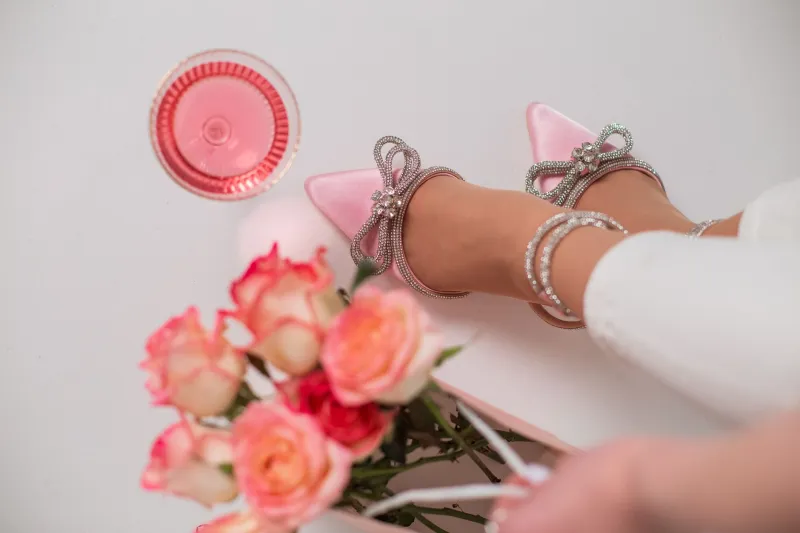
Every November, the same quiet drama unfolds in hallways across the country. A woman wrestles a pair of brand-new heels out of a box, tells herself they will be fine, and limps home at 11pm carrying them by the straps. By January they are at the back of the wardrobe, still beautiful, still unworn, quietly reproachful.
The answer is not another pair. It is a shoe audit. Not the spreadsheet kind that makes you feel bad about your life, but the practical kind that starts with the dresses you already own and ends with a number: the real cost per wear of the shoes you are about to buy.
Start with the outfits, not the shoes
The temptation is to shop shoes first and build outfits around them. Reverse it. Pull out the four or five party-adjacent dresses, skirts and suits you genuinely reach for between now and New Year. Be honest about the settings: the office dinner, the church hall fundraiser, the pub with the sticky floor, the friend's kitchen supper, the taxi queue that is really a 20-minute standing test.
Now look at hem lengths, tights, fabrics and how much walking is involved. A velvet midi that grazes the ankle needs a different shoe from a satin slip dress. A church hall with parquet floors is not the same as a restaurant with a gravel car park. This is not about creating a capsule wardrobe. It is about refusing to buy shoes for a life you do not actually live.
The three-pair formula
Three pairs can cover twelve outfits if you choose by heel height and finish rather than by mood. The formula I use is simple: one polished flat or low block, one mid-height block or sturdy kitten heel, and one higher, more decorative pair for the nights when someone else is driving.
Pair one is the workhorse. Think 20–30mm, a closed toe or a sleek loafer, in a colour that works with tights and bare legs. It handles the church hall, the long dinner and the walk from the car. Pair two is the 50–60mm block heel: flattering, stable on wet pavements, and forgiving enough for the office party where you stand for three hours. Pair three is the 70–80mm pair you actually love, reserved for seated dinners and short taxi hops. If you cannot walk from the car to the door in them, they are not party shoes. They are props.
The twelve-outfit test
Lay the three pairs beside your party clothes. Build four outfits per pair. If a pair cannot make four credible outfits, it is not earning its place. This is where most impulse buys fail. The embellished sandal might be gorgeous, but if it only works with one dress and one mood, it is a one-night stand, not a wardrobe member.
Try everything with the tights you will really wear. A nude fishnet changes the fit of a shoe. So does a 60-denier opaque. Check the heel height against the hem: a midi skirt that looks elegant with a flat can look frumpy with a high heel if the proportion is off. Take a photo. The camera is brutally fair.
Do the cost-per-wear sum before the checkout
Cost per wear is not about being mean to yourself. It is about spending where it counts. Divide the price by the number of times you realistically expect to wear the pair this season, then again by the seasons you expect to keep them.
A £150 pair worn eight times this winter and again next year is better value than a £45 pair worn twice and abandoned. The £85 block heel that becomes your default for every school run dinner and Sunday lunch will pay for itself faster than the £200 strappy pair that only suits one dress. The trick is to count honestly. Two wears is not four. 'I might wear them to a wedding' is not a plan.
The comfort notes nobody puts on the box
UK party season is hard on feet: damp pavements, uneven cobbles, overheated rooms and the long shuffle from the car. A block heel beats a stiletto on wet stone every time. Leather stretches; patent does not. Cheap soles are slippery on church hall floors. If you are between sizes, go up and add a heel grip rather than down and suffer.
Keep a blister kit in the car and one in your bag: fabric plasters, anti-chafe balm, a spare pair of heel grips and a slim folding flat. It is not defeat. It is logistics. The woman who changes into flats at 10.30pm is not less elegant than the one who limps. She is simply better prepared.
The end of the barefoot walk home
The barefoot walk home is not a rite of passage. It is a sign that the shoes were bought for the photograph, not the evening. This year, before you add another pair to the pile, do the audit. Three pairs, twelve outfits, one honest sum. Spend on the ones you will actually wear, and let the rest go back to the shop.
Elegance that survives the taxi queue, the church hall and the walk from the car is the only kind worth having. The shoes should be the least dramatic part of the night.