Wear It on a Wednesday: The £0 Wardrobe Reset That Ends the 'Best Clothes' Trap

There is a particular kind of coat that lives in the spare room. It is beautiful, it was not cheap, and it has been out exactly four times since you bought it. You know the one. It is the same coat you instinctively sidestep on a wet Wednesday morning because the school run feels too mundane for it. That is the trap, and it is costing you more than you think.
Most of us have a wardrobe with a border running down the middle. On one side: the real-life clothes. The jeans, the sturdy knit, the boots that can handle a puddle. On the other: the 'best' clothes. The silk shirt, the tailored trousers, the coat that only makes sense at a wedding or a nice dinner. The first pile works hard and looks tired. The second pile looks expensive and does nothing. It is a strange little museum, and you are paying rent on it.
The drawer of good intentions
I am not against nice things. I am against nice things that have been promoted to a status they cannot sustain. 'Best' is not a fabric quality. It is a postponement strategy. It means: wait until the day justifies me. But the day rarely arrives in the way we imagine. Life is mostly made up of ordinary Wednesdays, supermarket trips and the 6pm kitchen shuffle. If your good clothes are only invited to the exceptional, they will mostly stay in the wardrobe, and the cost-per-wear will stay embarrassing.
This is where the high-street maths gets interesting. A £150 coat worn four times costs £37.50 a wear. The same coat worn forty times costs £3.75. Nothing about the coat has changed. Only the life it has been allowed to have. That is not indulgence; it is basic economics. Saving your best clothes for 'best' is a tax on your own daily life.
The five-piece reset
This is the £0 wardrobe reset. No shopping, no new hangers, no dramatic clear-out. You are simply going to stop treating five pieces like artefacts and start treating them like clothes.
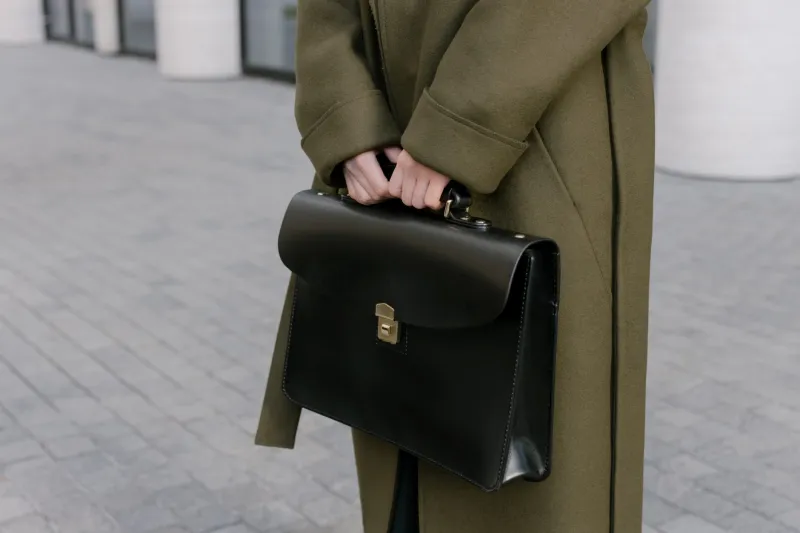
Choose five things you genuinely love but rarely wear. Be honest. Most women can name them in under a minute: the good coat, the silky shirt, the tailored trousers, the statement knit, the leather bag or the boots that only come out for 'nice' things. Take them out of their protective bags. Put them on the main rail, at eye level, where you actually get dressed. If they need a button sewn on or a hem taken up, do it now. A piece that needs fixing is not a piece waiting for an occasion; it is a piece waiting for you to finish the job.
School run, supermarket, 6pm kitchen
Here is where the reset gets practical. Take the good coat and wear it over your normal school-run uniform of jeans and a jumper. Not with heels. Not with a full face of make-up. Just with the life you are already living. The coat does the work. That is what good pieces are for.
Take the silky shirt and wear it under a chunky knit with jeans and trainers. It becomes a texture, not a costume. Take the tailored trousers and pair them with a plain T-shirt and flat boots for the supermarket. You will feel absurdly put-together in the cereal aisle, which is a perfectly good reason to do it. Take the statement knit and wear it to the 6pm kitchen — the bit of the day when dinner is happening and nobody is applauding. And take the leather bag or boots out of their dust bag and let them get a scuff. A scuff is not a tragedy. It is evidence of use.
The rule is simple: each of the five pieces must be worn at least twice in four weeks. Not saved. Not protected. Worn.
Measure the shift
At the end of the month, do the cost-per-wear sum. Take the price you paid and divide it by the number of times you have actually worn the piece since you bought it. Then compare it with how many wears you added in just one month. The shift is usually uncomfortable and motivating in equal measure. That coat you thought was a considered purchase starts to look like a bargain. The dress you wore once and never again starts to look like the real extravagance.
This is the part that changes behaviour. We are very good at justifying purchases and very bad at auditing them. A monthly wear count is not obsessive; it is just honest. It also quietly reframes what you buy next. You stop asking, 'Is this nice enough for best?' and start asking, 'Can I actually wear this on a Wednesday?'
The point is not dressing up
There is a version of this argument that turns into pressure — the idea that you must look polished at all times. That is not the point. The point is that your clothes should belong to your real life, not hover above it. Dressing well on an ordinary Wednesday is not a performance for the school gate or a bid for compliments. It is a decision to stop saving your life for later.
So start with five pieces. Wear the good coat to the supermarket. Wear the silk shirt to collect the children. Wear the nice trousers to the kitchen table. If you spill something, wash it. If it creases, iron it. If it wears out, that is a good problem — it means the thing did its job. A wardrobe is not a museum. It is a working collection, and the best pieces should be the hardest working of all.